
[Eco Journal = Pyeongtaek]
“We want to become a company that contributes to building a plastic-free society.”
These are the words of Park Jae-min (45), CEO of GRICO, a company leading the development of eco-friendly plastic materials using surplus agricultural products and agricultural and marine waste resources.
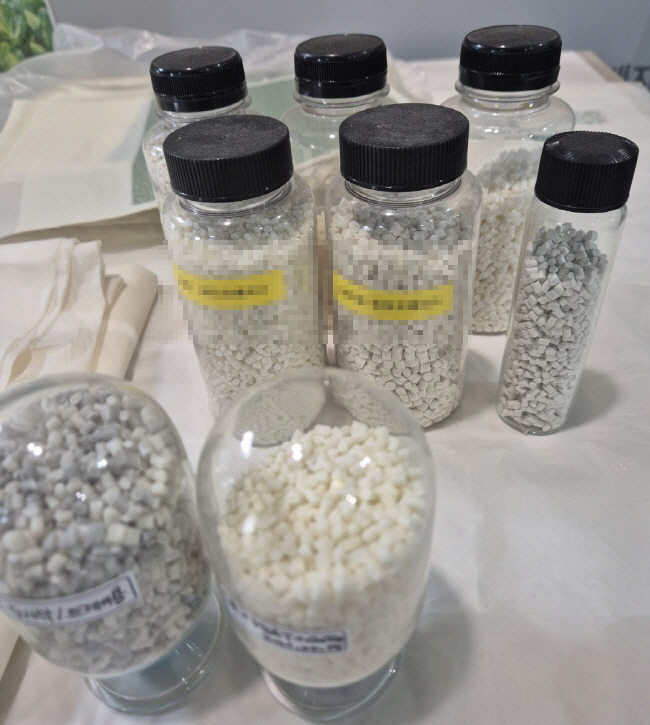
Materials (pellets) developed and produced by GRICO.
GRICO, a startup that established its factory and research institute in May last year in Jinwi-myeon, Pyeongtaek, produces approximately 3,000 tons of material pellets annually using surplus agricultural products and agricultural waste resources.
These materials serve as raw inputs for a wide range of products, including all types of plastic film products such as sanitary gloves, roll bags, and pouches, as well as cosmetic containers, lunch boxes, and food containers. They are also applicable to everyday items such as instant noodle cups and even packaging materials for electronic products.
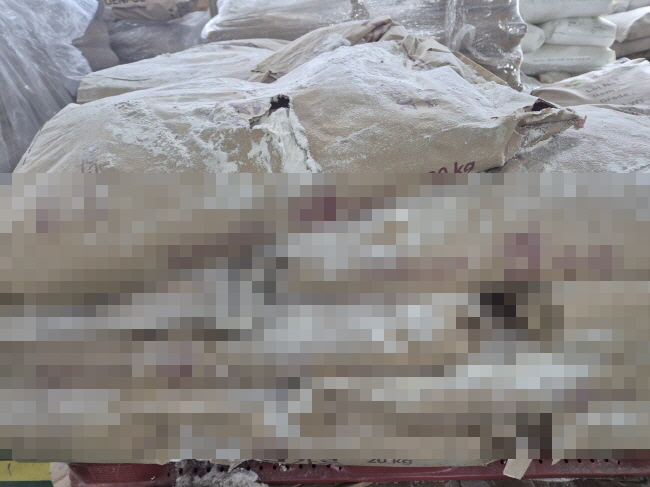
Imported rice waste resources used in the production of materials by GRICO.
GRICO currently imports and processes approximately 1,000 tons of imported rice waste per year at cost to produce its materials. The company plans to expand its feedstock base next year by utilizing a wider range of agricultural resources — including imported rice, domestic grain rice, sweet potatoes, potatoes, cassava, and onions — with a target production volume of over 10,000 tons of materials annually.
In the long term, GRICO aims to accept agricultural products that have lost market value due to storage or require disposal, potentially even receiving them with processing fees.
According to national waste statistics on disposal and treatment, agricultural and food waste in 2019 averaged 14,314 tons per day, an increase of 6.6% compared to 2010, resulting in an estimated economic cost of approximately KRW 20 trillion.
Globally, about 1.3 billion tons of food — roughly one-third of total food production — is wasted each year before reaching the table. The carbon footprint of this wasted food is estimated at 3.3 gigatons (Gt), accounting for about 6–10% of global greenhouse gas emissions.
GRICO goes beyond producing eco-friendly materials based on surplus agricultural and agricultural waste resources, aiming to provide a full “natural circulation economy” solution. The company plans to collect used products through local recycling systems, convert them into fertilizer, and return them to nature.
Park Jae-min stated,
“The concept of ‘natural circulation,’ which we distinguish from the commonly used term ‘resource circulation,’ is the philosophy that GRICO pursues.”
The company also continues social contribution efforts through environmental protection and sharing initiatives, allocating about 3–5% of total profits to support vulnerable groups such as elderly individuals living alone and single-parent households.
GRICO products applied to delivery containers are designed to be environmentally friendly and can decompose together with leftover food in food waste processing systems.
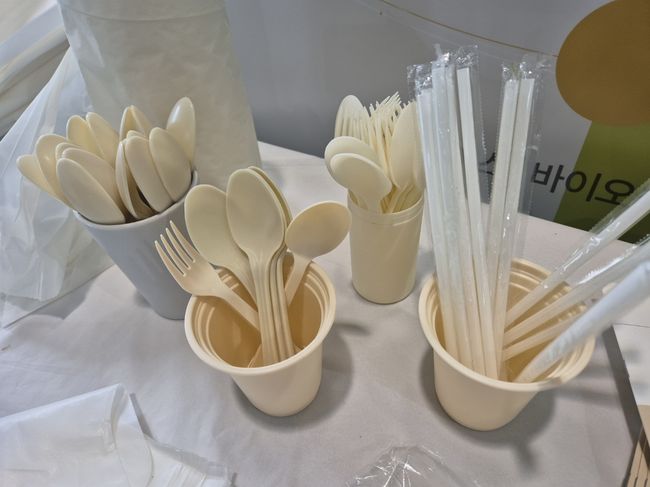
Products such as spoons, forks, straws, and reusable cups produced by GRICO.
The research institute affiliated with GRICO is focusing on developing various products that can replace nonwoven fabrics and Styrofoam. It evaluates whether materials can be commercialized by testing key properties such as tensile strength and impact resistance.
Processes such as microplastic detection testing and natural biodegradation performance evaluation are mandatory steps in its development pipeline.
GRICO holds 16 domestic patents and trademark rights, as well as foundational agricultural material patents in Europe (EU). Its biodegradable water-based raw materials have also received eco-friendly certifications, including Green Technology Certification from the Ministry of Environment and certification from the Korea Environmental Industry & Technology Institute.
In addition, the company has obtained BPI (Biodegradable Products Institute) certification in the United States, FDA approval for food-contact applications, and European Union biodegradable certification, strengthening its credibility in global markets.
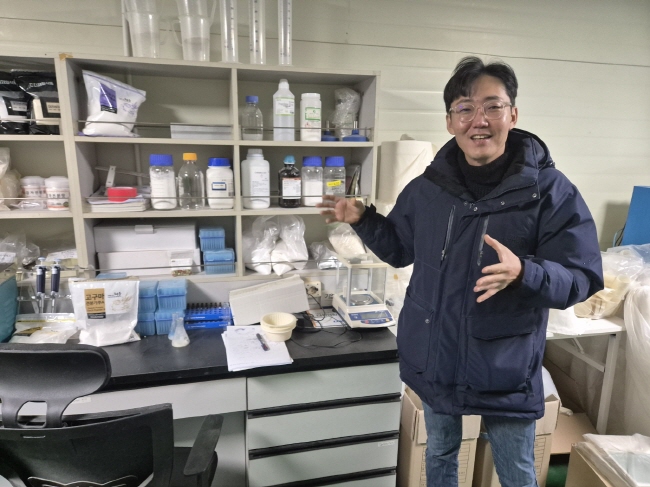
Park Jae-min explaining material development at the research institute of GRICO.
GRICO CEO Park Jae-min stated that the company is prioritizing the development of products that can be applied to urgent environmental issues that have become major social concerns.
He explained that GRICO plans to start by producing and supplying alternative materials for marine pollution sources such as fishing gear, fishing nets, and buoys.
The company also plans to utilize large-scale marine biomass entering the coasts of Jeju and Jeonnam, including “Sargassum horneri (괭생이모자반)” and “Ulva pertusa (구멍갈파래).”
These marine organisms, which cause environmental damage by harming coastal scenery and producing strong odors, are expected to be repurposed as valuable raw materials — achieving multiple environmental benefits simultaneously, including waste reduction, resource utilization, and ecosystem restoration.